Staying Connected: Data & eSIMs
import { Aside, Card, CardGrid, LinkButton } from ‘@astrojs/starlight/components’;
One of the biggest anxieties riders have before tackling the Mae Hong Son loop is losing their connection in the deep jungle. What happens if you break down? How do you navigate the endless maze of switchbacks?
Here is the good news: Mobile data in Northern Thailand is surprisingly excellent, provided you choose the right network and set yourself up before you arrive.
🏔️ The Reality of Mountain Coverage
Section titled “🏔️ The Reality of Mountain Coverage”Not all Thai telecom networks are created equal, especially when you leave the Chiang Mai city limits.
- AIS (The Mountain King): This is the network you want for the loop. AIS has invested heavily in rural cell towers. You will have strong 4G (and often 5G) in Pai, Mae Hong Son City, Mae Sariang, and even in remote villages like Ban Rak Thai. You will only lose signal in the very deepest valleys between mountain passes.
- TrueMove H / Dtac: Excellent in Chiang Mai and Bangkok, but they suffer from significant dead zones once you get deep into the Mae Hong Son province.
🗺️ Old School Navigation: The 2003 Way
Section titled “🗺️ Old School Navigation: The 2003 Way”The first time I tackled the Mae Hong Son loop in 2003, smartphones didn’t exist, and Google Maps was years away. We did what people did back then: we carried a paper map strapped to the fuel tank and hoped for the best.
Even in the age of 5G, there is a lot to be said for having a backup.
- Print your own: You can download and print our high-res route map here (Link coming soon).
- The Gold Standard: If you want the absolute best physical map, look for the GT-Rider.com Mae Hong Son Loop map. You can buy them at major bike rental shops in Chiang Mai. They are updated constantly and are the gold standard for riders.
📲 Physical SIM vs. eSIM
Section titled “📲 Physical SIM vs. eSIM”You have two options when arriving in Thailand: queue up at a kiosk in the airport after a 15-hour flight to buy a physical plastic SIM card, or download an eSIM while you are still lying in bed back home.
Why eSIMs are the superior choice for riders:
- Immediate Connectivity: You can activate the eSIM at any Thai port of entry or land border. The second your plane touches down in Chiang Mai (or Bangkok), your phone connects to the local network. You can immediately order a Grab taxi to your hotel without hunting for public Wi-Fi.
- Keep Your Home Number Active: By using an eSIM for your Thai data, you can keep your physical home SIM card in your phone. This means you can still receive bank 2FA SMS texts (which you will need when trying to book hotels or flights on the road).
- Zero Hassle: No tiny sim-ejector pins. No losing your home SIM card in the bottom of your backpack.
🏆 Our Top Recommendation: BNE SIM
Section titled “🏆 Our Top Recommendation: BNE SIM”While there are many tourist eSIM providers out there, the company we recommend most for cost and absolute reliability is BNE SIM.
- 30% Discount: Click this link and you’ll get 30% off your first order. (Discount code BNESIM30 is applied automatically — use it manually at checkout if it doesn’t apply).
- Network Access: BNE SIM partners with the top tier local networks (meaning you get that vital AIS mountain coverage).
- Cost Effective: BNE sims have data at less than $.50 USD per gigabyte these days—so say goodbye to the days of overpriced tourist sims.
- No Expiration Anxiety: Unlike airport cards, they offer options for daily data or total gigabyte packages that don’t expire after a strict 8-day window.
Why Airport “Tourist SIMs” are a Rip-off
Section titled “Why Airport “Tourist SIMs” are a Rip-off”When you land at the airport, you’ll be bombarded by booths selling tourist SIMs for over 500 THB. It is a complete rip-off. Pay for your eSIM now, install it to your phone, and hit the ground running as soon as you land.
| Feature | Tourist SIM (Airport) | BNE SIM (eSIM) |
|---|---|---|
| Typical Cost | $22 (15 Days) / $37 (30 Days) | $8 (30 Days / 20GB*) |
| Price per GB | ~$2.50+ USD | ~$0.35 USD |
| Activation | Wait in line at kiosk | Instant (via QR Code) |
| Verdict | Overpriced Rip-off | Value King: 30% Off |
*Price after 30% off promo code applied.
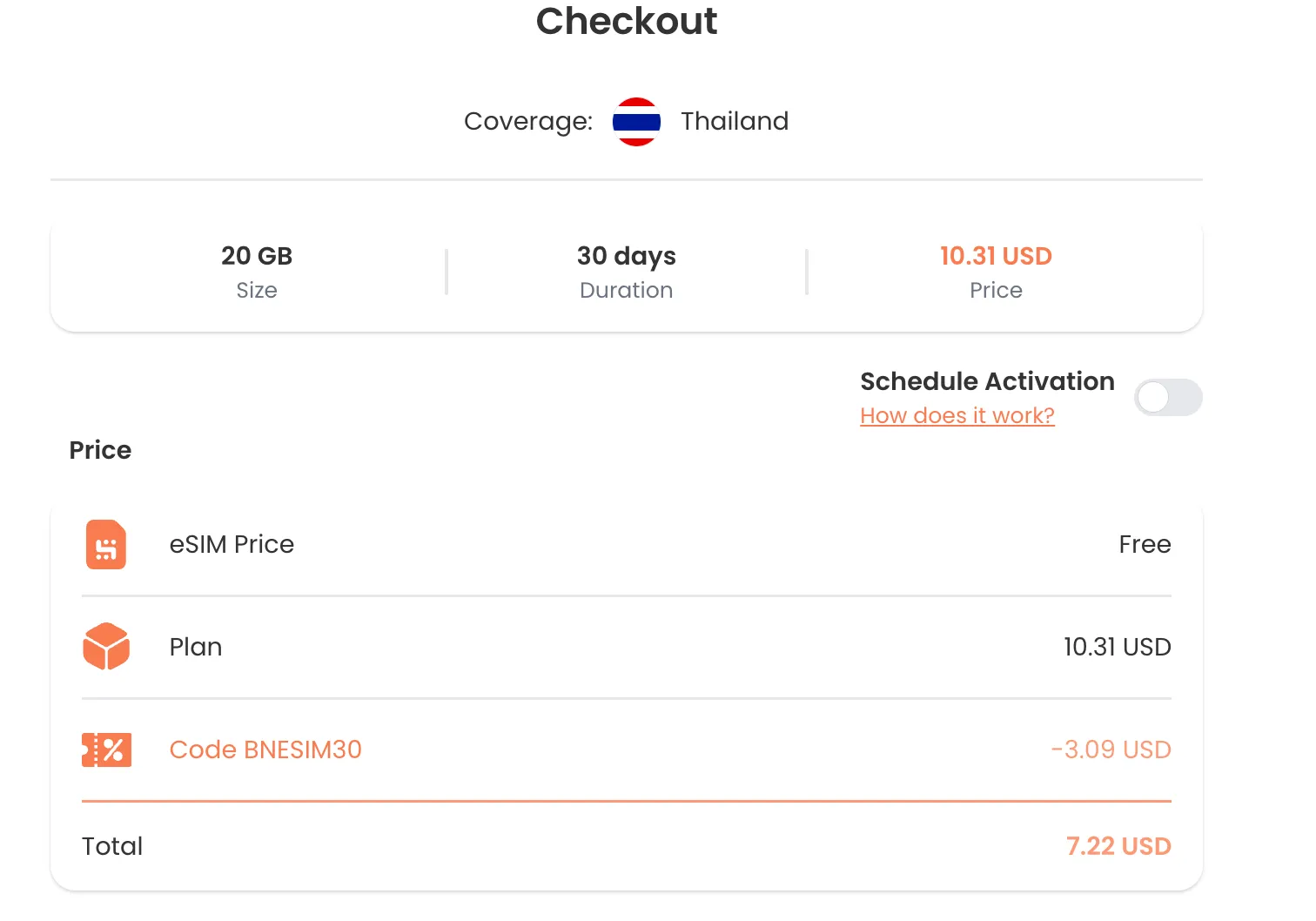
[!IMPORTANT] Disable “Smart Top-up”: BNE SIM has an automatic smart top-up feature enabled by default. To avoid unexpected charges, make sure to unselect this option during the checkout process (as shown in the image above) unless you explicitly want it to auto-refill.
Activate Your 30% Off BNE eSIM Here
📡 Essential Offline Etiquette
Section titled “📡 Essential Offline Etiquette”Even with the best AIS coverage via a BNE eSIM, you will still hit dead zones. Mountains block radio waves; it’s just physics.